What is Eating The Coral?
We all know about the worldwide crisis coral reefs are facing on a day-to-day basis, from overfishing, pollution and climate change to chemical disruption from personal care products such as face wash and sunscreen. But some corals face an additional problem: being eaten by a giant seastar.
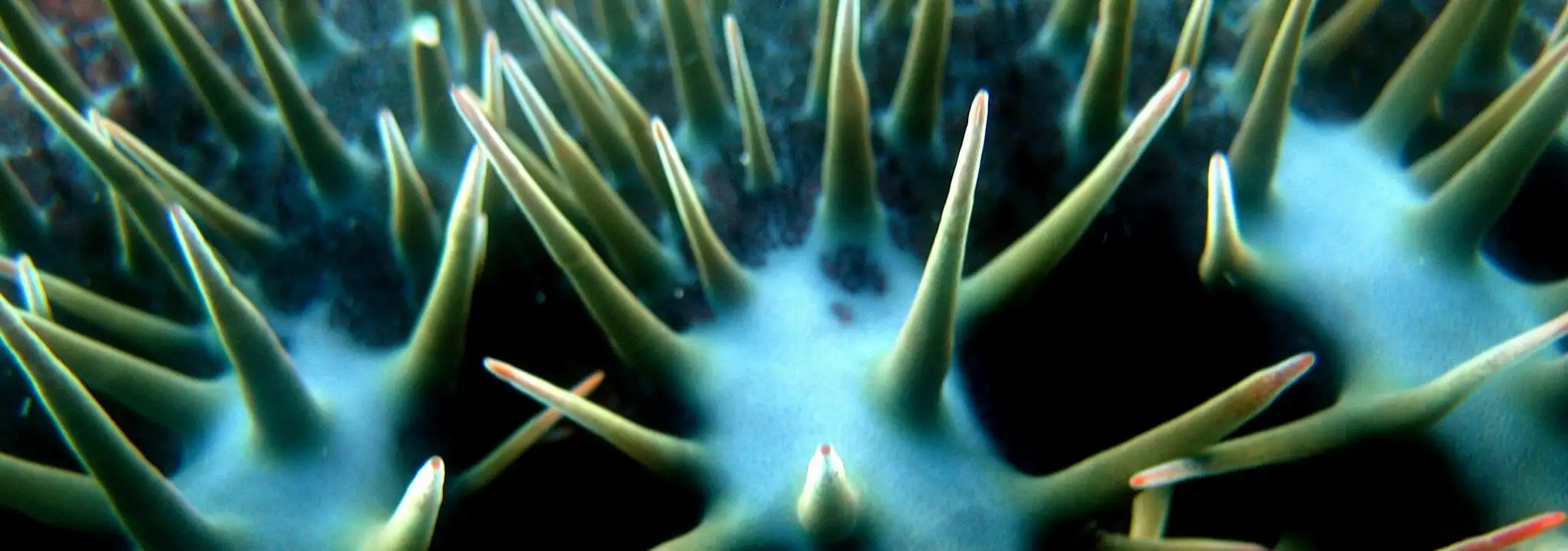
A Giant Seastar With a Serious Appetite
Outbreaks of Crown of Thorns Starfish, also known as COTS, pose a significant threat to coral reefs in the Indo-Pacific region. According to the Living Oceans Foundation, these starfish can occur in very high densities and are capable of destroying large areas of reef when outbreaks are left unchecked.
One way of being an ocean warrior and ensuring your decisions reflect best practice for our environment is choosing an eco-conscious travel operator. Making an effort to choose responsible marine tourism operators while travelling can help preserve these delicate ecosystems.
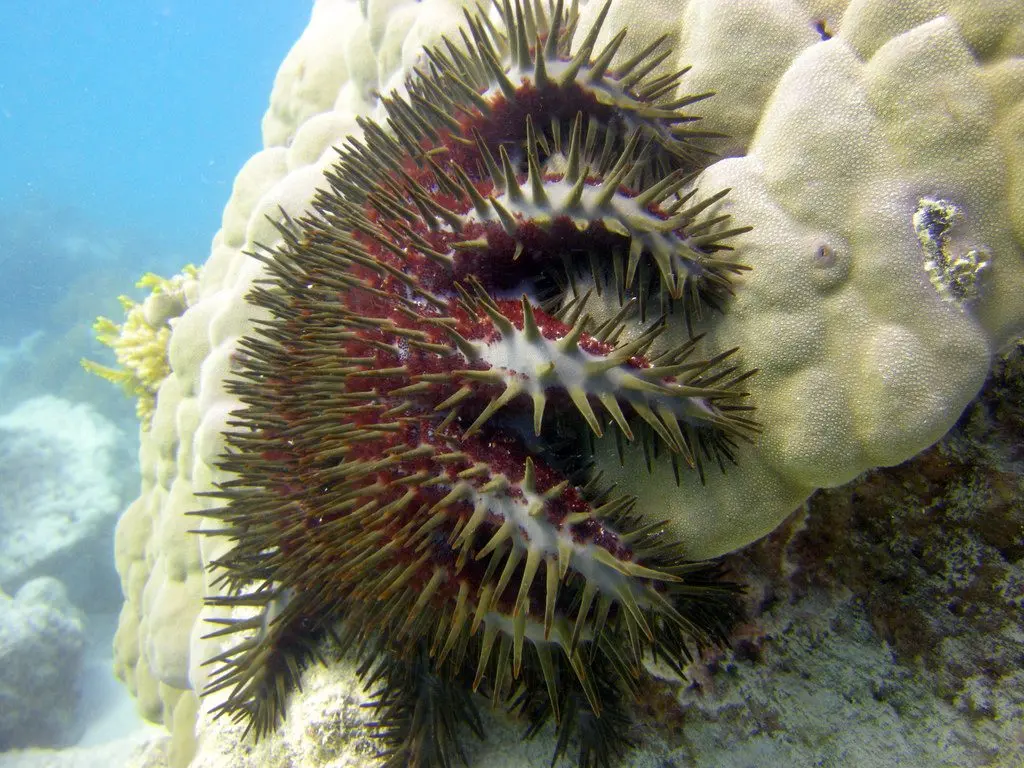
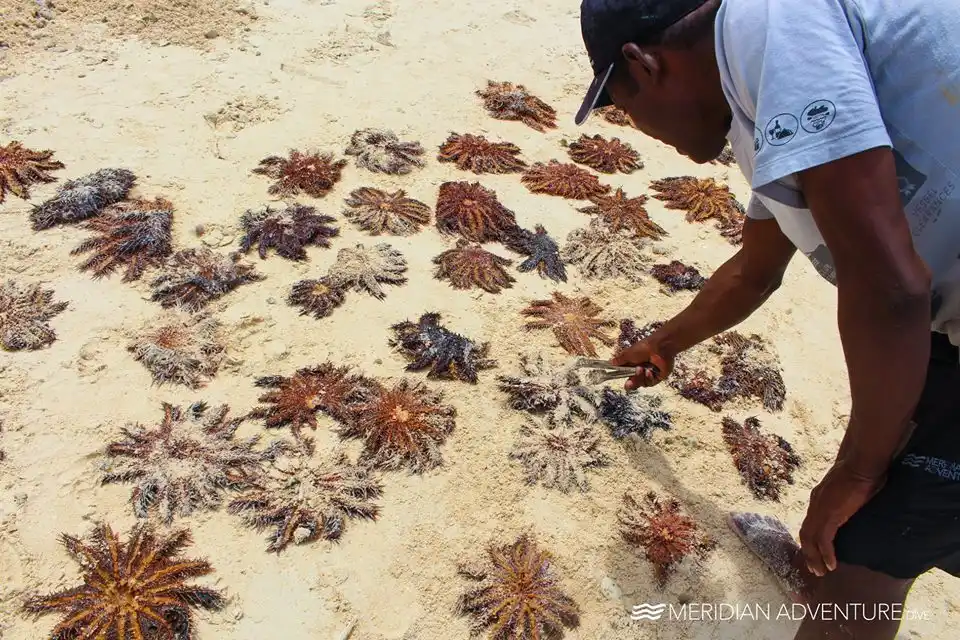
Crown of Thorns in Raja Ampat
Meridian Adventure Dive has been active in the removal of these little critters since our inception in 2017. Monthly expeditions help remove infestations and record the data for further research purposes.
It is believed the seastars were introduced to the reef through the ballast water of passing cargo ships, and with few predators in Indonesian waters, they have thrived. COTS are known to grow up to half a metre wide and are the second largest starfish in the world.
COTS Removal Programme in Raja Ampat
Another unknown fact about these predators of coral is that they are covered in venomous spines, making them notoriously difficult to remove and requiring special gear such as gloves.
Meridian Adventure Dive, alongside other dive operators in the area, controls and removes COTS where infestations occur, helping to mitigate damage to the coral reefs.
How Does It Work?
COTS removal needs to be careful, controlled and documented. The goal is to reduce the pressure on living coral while collecting useful information for ongoing reef monitoring.
- We locate the COTS and take pictures.
- Inject with vinegar water using special equipment.
- Remove the injected COTS to dry out on the beach.
- Once dried out, we bury it in the sand.
- We record the details on a Google Drive document for data enhancement.
COTS outbreaks have the potential to have a devastating impact on coastal communities across the region.
Watch a Quick Video About Crown of Thorns Starfish
Watch this quick video from the Khaled bin Sultan Living Oceans Foundation to understand why Crown of Thorns outbreaks matter for reef health.
Keep a Look-Out During Your Dives
Wherever you may be, ask your dive resort about invasive species and keep a look-out during your dives for infestations of five to ten observed in any one traverse.
Responsible divers can help by choosing eco-conscious operators, following dive briefings, avoiding contact with the reef and reporting unusual reef damage or predator outbreaks to the dive team.
Frequently Asked Questions About What Is Eating The Coral
What is eating the coral?
One major coral predator is the Crown of Thorns Starfish, often called COTS. During outbreaks, it can consume large amounts of coral tissue.
Why are COTS a problem?
When numbers grow too high, COTS can damage reefs quickly, reducing live coral cover and affecting fish, invertebrates and reef habitat.
Can divers remove Crown of Thorns starfish?
Removal should only be done by trained teams with proper equipment, because COTS are covered in venomous spines and require careful handling.
How can travellers help protect coral reefs?
Travellers can choose responsible operators, use reef-conscious sunscreen, avoid touching coral, control buoyancy and report signs of outbreaks to the dive team.
Contact Meridian Adventure Dive Resort
Situated in Raja Ampat, Indonesia, Meridian Adventure Dive is a PADI 5-Star Resort and winner of the PADI Green Star award. Scuba divers enjoy our professional service, responsible travel values and comfortable land-based access to Raja Ampat’s reefs.
Use the links below to visit our website, send an enquiry or follow Meridian Adventure Dive Resort on social media.