What Is the Anemone Shrimp (Periclimenes brevicarpalis)?
Nestled within the vibrant coral reefs of Raja Ampat, one of the most biodiverse marine environments on Earth, lives a tiny yet captivating marine species — Periclimenes brevicarpalis, commonly known as the Glass Anemone Shrimp or Peacock-Tail Anemone Shrimp.
Despite its small size, this shrimp is a favourite among macro photographers, marine biologists, and serious divers exploring Raja Ampat’s untouched dive sites. In this feature, we explore its biology, behaviour, ecological importance, and why Raja Ampat offers an ideal environment for observing this remarkable creature in the wild.
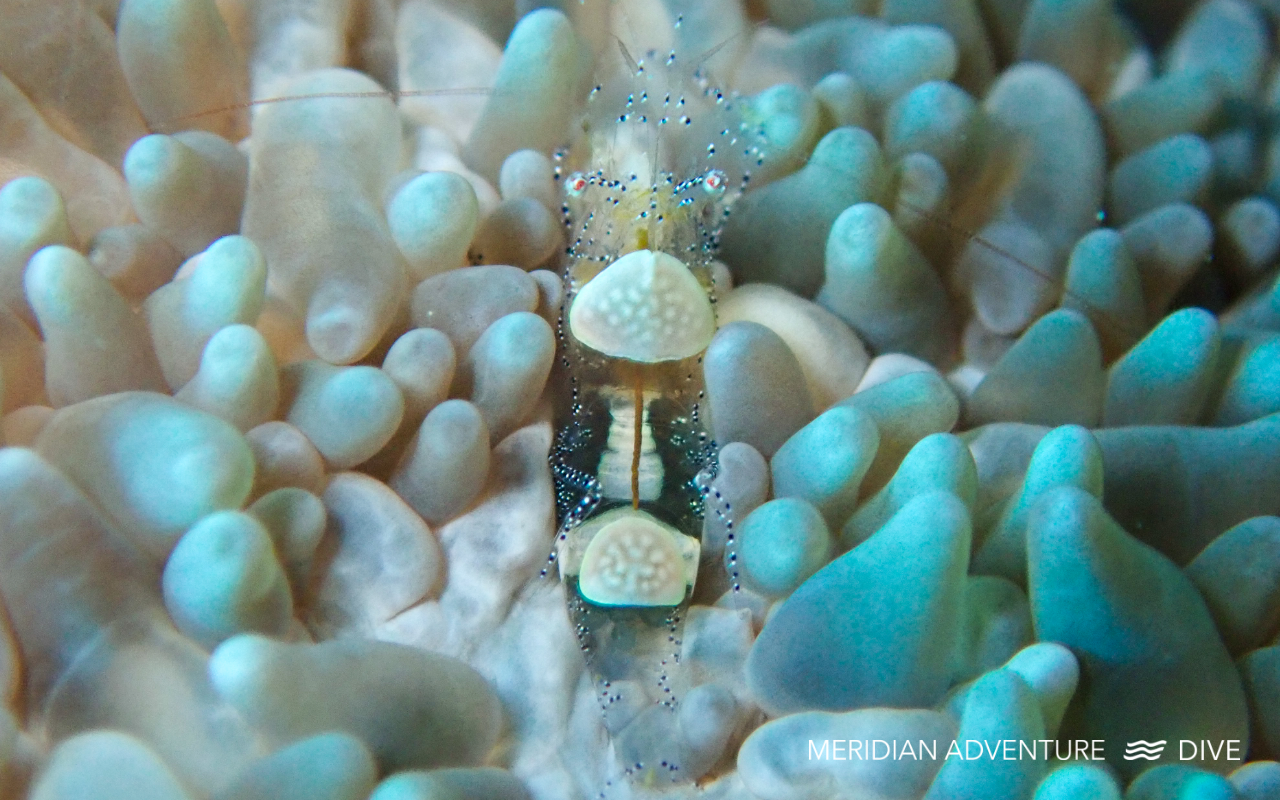
A Masterpiece of Transparency and Colour
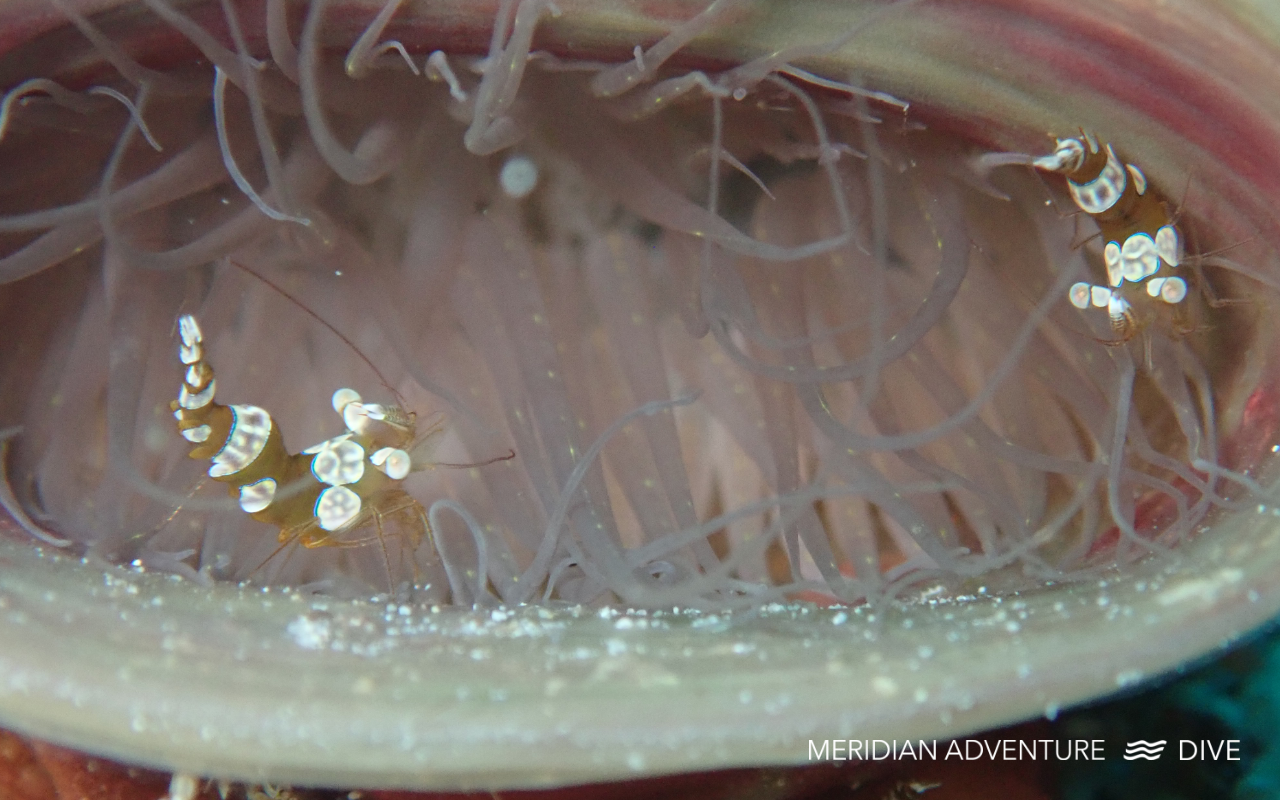
The Anemone Shrimp is a marvel of evolutionary design. Its body is predominantly transparent, allowing it to blend seamlessly into its surroundings — an essential survival adaptation in predator-rich coral reef ecosystems.
What truly sets it apart, however, is its striking tail. Vivid hues of electric blue, purple, and yellow give rise to the name Peacock-Tail Anemone Shrimp. These colours are complemented by delicate white spots on the carapace and claws, creating an almost ethereal appearance against coral and anemone hosts.
This unique combination of transparency and colour functions both as camouflage and deterrence, helping the shrimp avoid predation while remaining visible enough to communicate with potential mates.
Symbiotic Relationship with Sea Anemones
One of the most fascinating aspects of Periclimenes brevicarpalis is its mutualistic relationship with sea anemones.
Living safely among the anemone’s stinging tentacles, the shrimp gains protection from predators. In return, it provides a valuable cleaning service — removing parasites, debris, and dead tissue from its host.
This delicate balance is made possible by a special chemical coating on the shrimp’s body, which prevents the anemone from recognising it as prey. It’s a perfect example of the complex symbiotic relationships that define healthy, untouched coral reef systems like those found in Raja Ampat.
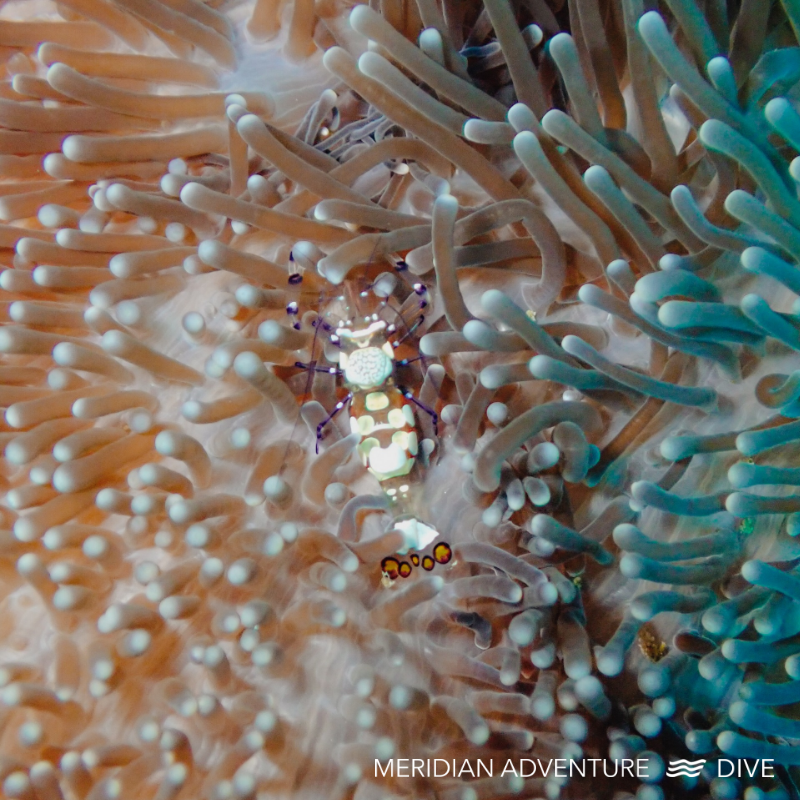
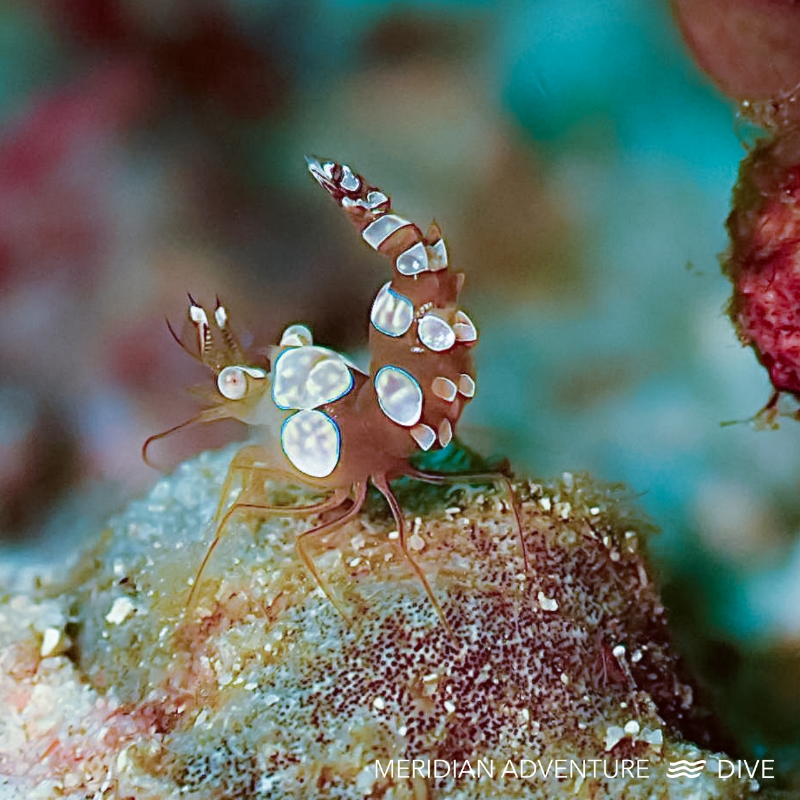
Why Raja Ampat Is the Perfect Habitat for Anemone Shrimp
Anemone Shrimp are typically found at depths between 5 and 30 metres, inhabiting coral reefs rich in large sea anemones and soft corals.Raja Ampat’s clear waters, minimal human impact, and extraordinary marine biodiversity make it an ideal habitat for this species. While its distribution spans much of the Indo-Pacific region, sightings in Raja Ampat are particularly frequent — a testament to the region’s pristine conditions and effective conservation.
Ecological Role on Healthy Coral Reefs
Though small, the Anemone Shrimp plays an important role in maintaining reef health.
As scavengers, they feed on detritus, plankton, and organic particles, helping keep their environment clean. Their cleaning behaviour supports the health of their host anemones, which in turn supports the broader reef ecosystem.
They are also social animals, often observed in pairs or small groups sharing the same host. When threatened, they retreat deeper into the anemone’s tentacles, using natural defences rather than aggression — a subtle but effective survival strategy.
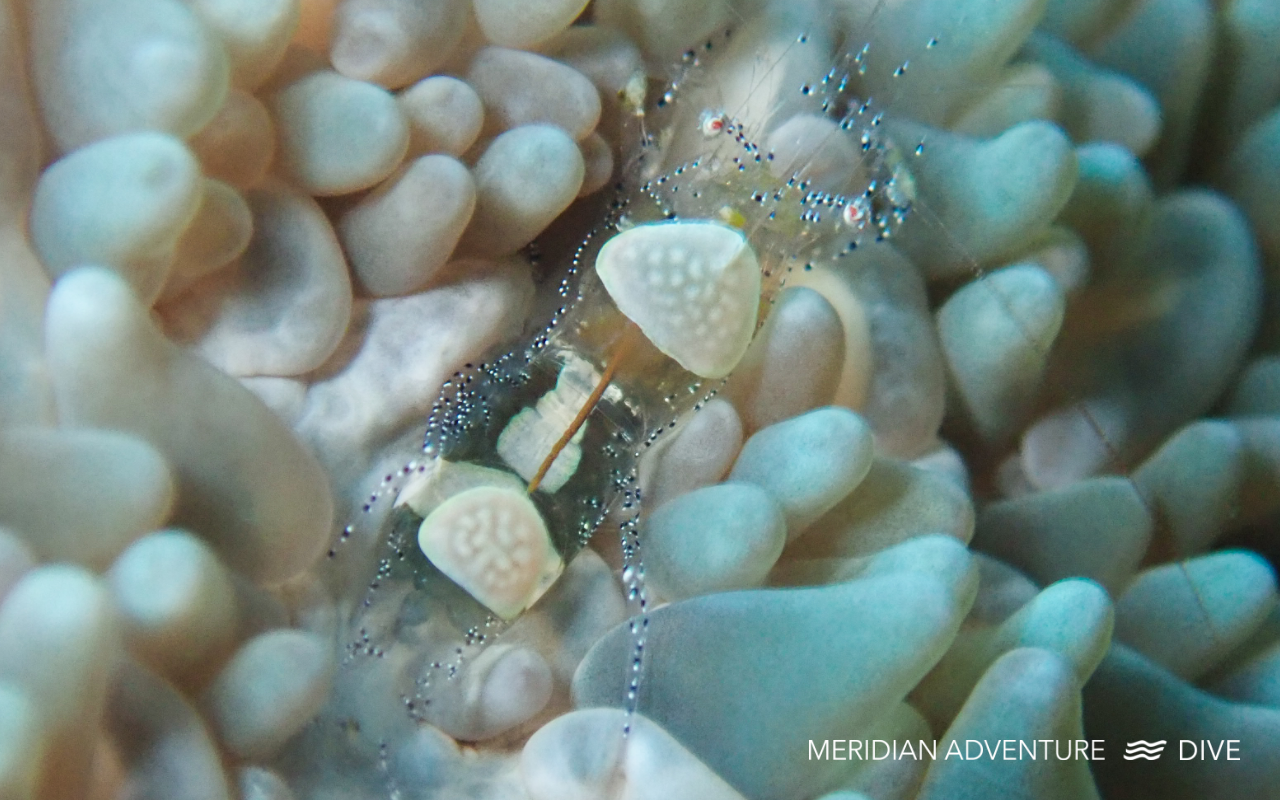
Anemone Shrimp Reproduction and Life Cycle
The reproductive process of the Anemone Shrimp adds another layer to its intrigue. Females carry fertilised eggs beneath their abdomen, clearly visible through their transparent bodies. These eggs are typically bright green, creating a striking visual contrast.Once hatched, the larvae drift into the open ocean as plankton. This stage is the most vulnerable in their life cycle. Those that survive eventually return to the reef, locate a host anemone, and begin the cycle anew — reinforcing the importance of healthy reef systems for species survival.
Macro Photography Tips for Anemone Shrimp
For underwater photographers, Periclimenes brevicarpalis is a dream subject. Its intricate patterns, vibrant colours, and delicate movements make it both challenging and rewarding to capture.
Macro photographers visiting Raja Ampat dive sites such as Chicken Reef, Sardine Reef, and Blue Magic often search specifically for these shrimp. Calm conditions, excellent visibility, and biodiversity-rich reefs make Raja Ampat one of the world’s premier destinations for macro photography.
Raja Ampat: Where Wild Diving Meets Reliability
Beyond photography, encounters with creatures like the Anemone Shrimp highlight why Raja Ampat is considered the pinnacle of global dive destinations.
At Meridian Adventure Dive Resort, divers experience front-row access to these pristine ecosystems — paired with something rare in such a remote location: seamless logistics and reliable modern comfort.
Set within a calm mangrove sanctuary, Meridian offers a stress-free base for serious divers who want to explore the wild — and return to certainty.
About Meridian Adventure Dive Resort:
Meridian Adventure Dive Resort is a PADI 5-Star Eco Resort located in the heart of Raja Ampat, Indonesia. Purpose-built by divers, for divers, the resort combines:
Front-row access to world-class, untouched dive sites
Small groups and expert local guides
A naturally calm, sheltered mangrove setting
Reliable 24/7 electricity, air conditioning, hot water, and Wi-Fi
Wild diving. Modern comfort.
Explore the planet’s richest marine biodiversity — then rest in comfort that simply works.
FAQs
Where can you find Anemone Shrimp in Raja Ampat?
Anemone Shrimp are commonly found between 5 and 30 metres depth on coral reefs with large sea anemones, particularly at macro-rich dive sites such as Chicken Reef, Blue Magic, and Sardine Reef.
Is the Anemone Shrimp rare in Raja Ampat?
No. Raja Ampat’s pristine reef systems make sightings frequent, especially on healthy anemone-rich dive sites.
Why do Anemone Shrimp live in sea anemones?
They gain protection from predators while cleaning their host, forming a mutualistic relationship essential to reef health.
Is Raja Ampat good for macro diving?
Raja Ampat is considered one of the world’s top macro diving destinations due to biodiversity, visibility, and low reef impact.
Visit our online platforms:
Website: https://raja.meridianadventuredive.com/
Facebook: https://www.facebook.com/meridianadventuresdive
Instagram: https://www.instagram.com/meridian_adventure_dive/
YouTube: https://www.youtube.com/channel/UC_8-kt5sTczmclJkx4KcmaA