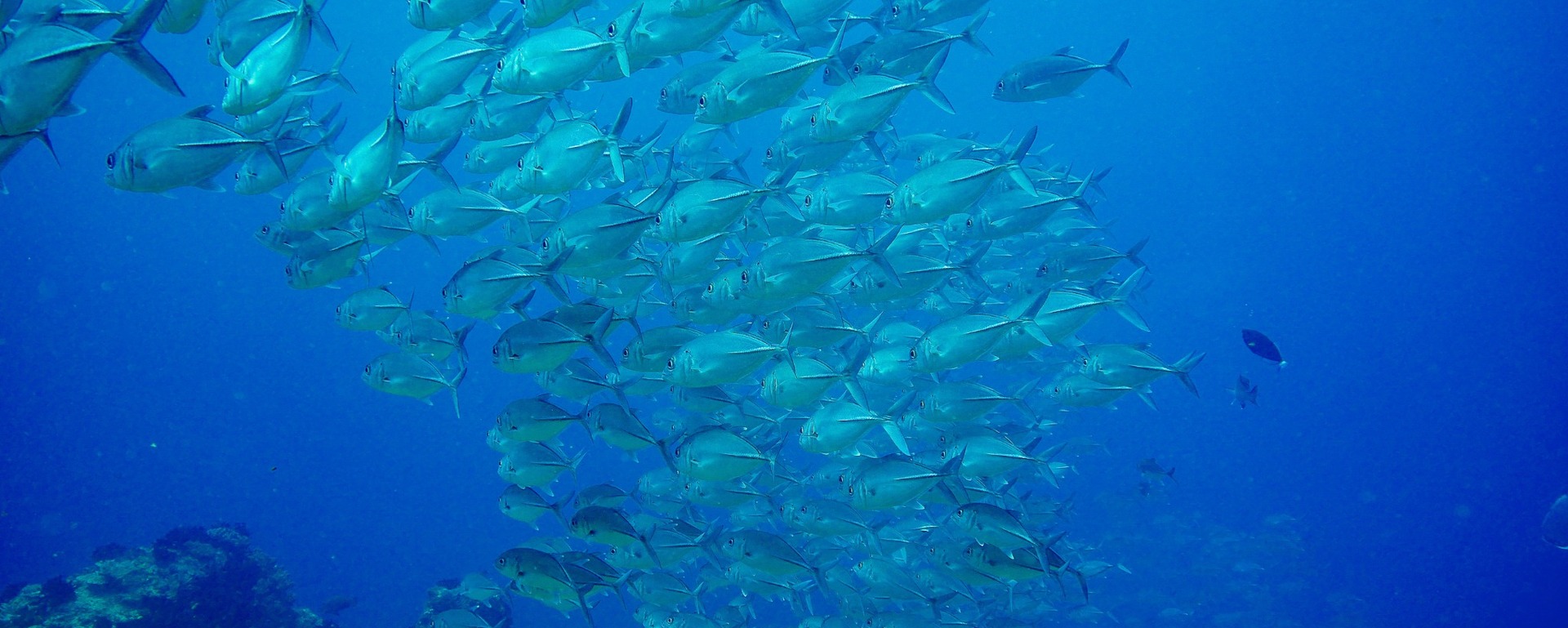


The Raja Ampat Creature Feature: Bigeye Trevally
Discover the bigeye trevally in Raja Ampat — a fast-moving, schooling predator known for its silvery body, large eyes, and unforgettable presence on healthy reefs.
Quick Facts About Bigeye Trevally
Bigeye trevally belong to the Carangidae family and are known scientifically as Caranx sexfasciatus. They are strong, fast-swimming predatory fish with streamlined bodies built for speed, agility, and coordinated hunting.
Commonly found around coral reefs, reef edges, open water, and underwater structures, bigeye trevally feed on smaller fish, crustaceans, and other marine organisms.
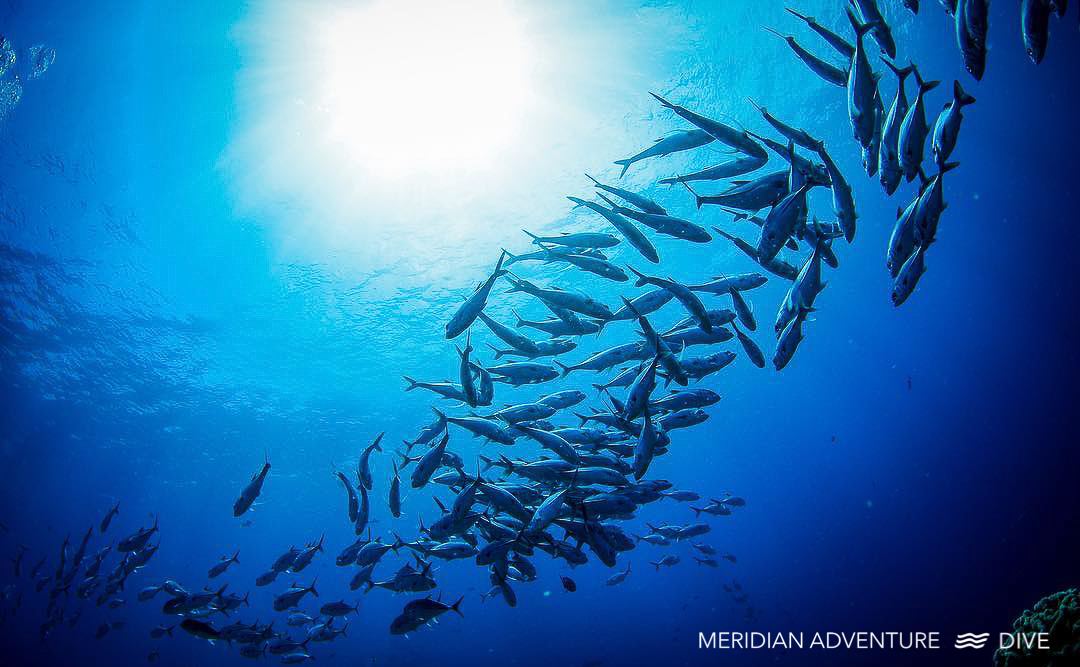
They are often seen schooling in large groups, which is one of the reasons divers love them so much. Their fast-moving silver schools and dramatic blue-water encounters make them one of the most memorable fish species to see in Raja Ampat.
In this Creature Feature, you will learn what bigeye trevally are, how to identify them, where they live, and why they are such a memorable part of diving in Raja Ampat. Meridian Adventure Dive offers professionally guided, safety-first diving in Raja Ampat with purpose-built boats, eco-conscious operations, and a strong focus on exceptional underwater experiences.
What Is a Trevally?
Trevally is a common name for several species of fish belonging to the family Carangidae. These fish are also known by other names, such as jacks or kingfish, depending on the region. Trevally fish are known for their strong, streamlined bodies, which make them excellent swimmers.
They are found in many marine environments, from shallow coastal waters to deep offshore areas. Trevally are often associated with coral reefs, rocky shorelines, and underwater structures. Some species are known for their preference for estuaries and brackish water.
Bigeye Trevally in Raja Ampat
Trevally fish are found in various parts of the world, including the Indo-Pacific region in Raja Ampat — the bigeye trevally, scientific name Caranx sexfasciatus.
Bigeye trevally are characterised by their elongated and streamlined bodies, large eyes, and a series of horizontal black bands or stripes along their sides. These stripes are a key identifying feature and may vary in intensity and number among individuals.
For divers and underwater photographers, seeing a large school of bigeye trevally sweeping across a reef or circling in blue water is one of the classic Raja Ampat marine life moments. If you love fast-moving pelagic action, you may also enjoy our guide to schooling fish in Raja Ampat.
A short video helps bring their schooling behaviour, speed, and presence in Raja Ampat to life.
Habitat and Where They Live
Trevally are found in many marine environments, from shallow coastal waters to deep offshore areas. They are often associated with coral reefs, rocky shorelines, and underwater structures. Some species are known for their preference for estuaries and brackish water.
In Raja Ampat, this makes them a natural part of the region’s rich underwater ecosystem. Bigeye trevally are commonly found in marine environments where reefs, structure, and open water meet, including coral reefs and reef slopes, current-influenced areas, structure-rich sites and jetty environments, and open water close to productive reef systems.
For divers planning a trip around big fish action, dive sites such as Cape Kri, Chicken Reef, Arborek Jetty, and Yenbuba Jetty are all worth exploring on the Meridian Adventure Dive blog.
Appearance of Trevally Fish
Trevally species vary in appearance, but they typically have a silvery colouration with shades of blue or green on their upper bodies. They often have a distinctive forked tail and a robust, muscular build.
The size of trevally fish can vary among species, but many can grow large. Some individuals can reach lengths over 3 feet and weigh up to 50 pounds or more, depending on the species.
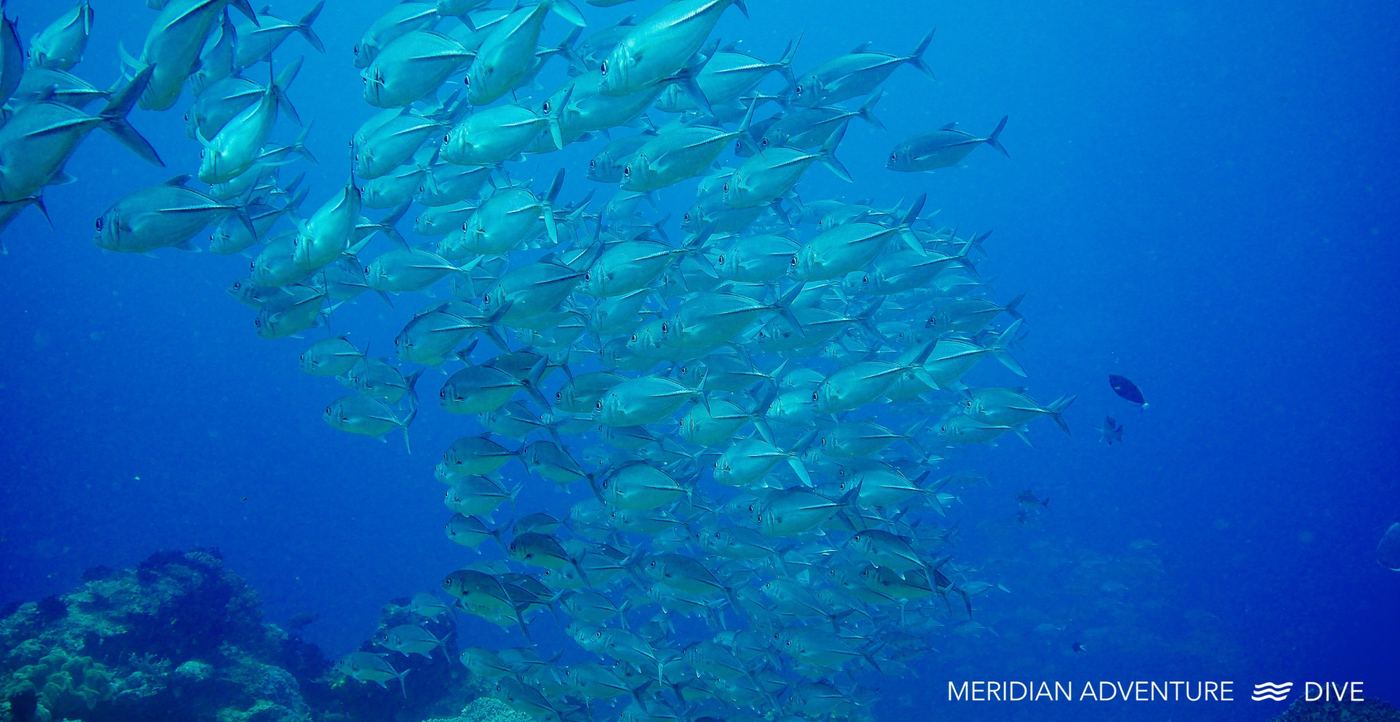
Bigeye trevally are especially dramatic when viewed against the light in clear blue water.
Start with our Raja Ampat dive packages and let our team recommend the best trip length, dive sites, and daily timing based on your experience level and marine life goals.
Schooling Behaviour and Feeding
These fish are known for their schooling behaviour, often forming large groups in open water or around reefs. They are predatory fish and primarily feed on smaller fish, crustaceans, and other tiny marine organisms.
Their hunting strategy often involves speed, coordination, and ambush tactics, which is part of what makes them so fascinating to watch underwater. When the light hits a moving school of trevally, the effect can be spectacular for divers and photographers alike.
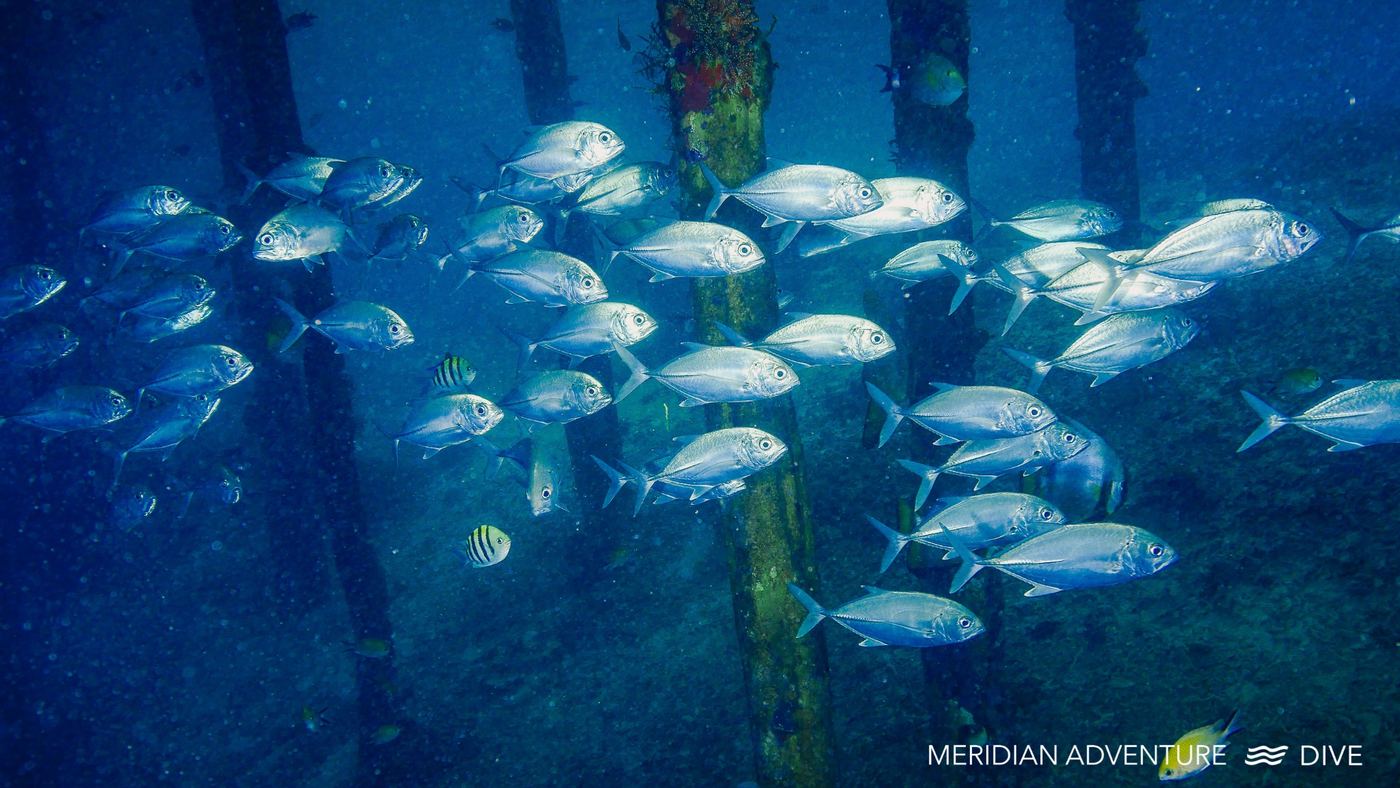
Bigeye trevally also gather around structure-rich environments where smaller prey species are abundant.
Why Bigeye Trevally Matter in Raja Ampat
Bigeye trevally populations can be vulnerable to overfishing, so conservation efforts and sustainable fishing practices are essential to ensure their continued presence in the oceans.
In Raja Ampat, schooling predators like bigeye trevally are part of the healthy balance that supports vibrant reef ecosystems. Their presence helps showcase why this region is globally celebrated for biodiversity, fish biomass, and unforgettable reef life.
If you enjoy this article, continue exploring more marine life stories through our Creature Features on Sweetlips, Long-Fin Batfish, Sergeant Major Fish, Blue-Ringed Octopus, Pygmy Seahorse, and Peacock Mantis Shrimp.
Diving Responsibly Around Bigeye Trevally
When observing bigeye trevally underwater, good diving practices matter:
Maintain strong buoyancy control around reefs and schooling fish.
Avoid chasing schools for photos.
Let natural behaviour unfold without pressure.
Follow your dive guide’s briefing and site procedures.
Choose operators committed to sustainable diving and reef protection.
At Meridian Adventure Dive, responsible diving is part of the experience, not an afterthought. Guests who want to build more confidence underwater can also explore available PADI courses in Raja Ampat.
Frequently Asked Questions About Bigeye Trevally
What is a bigeye trevally?
Why is it called a bigeye trevally?
Where can you see bigeye trevally in Raja Ampat?
Do bigeye trevally swim in schools?
What do bigeye trevally eat?
Are bigeye trevally dangerous to divers?
Why are bigeye trevally important to reef ecosystems?
Situated in Raja Ampat, Indonesia, Meridian Adventure Dive is a PADI 5-Star Eco Resort and winner of the PADI Green Star award. Scuba divers enjoy our professional services, which have become synonymous with the PADI and Meridian Adventure names.