

From Threat to Action: Restoring Raja Ampat’s Reefs Together
Raja Ampat reef restoration depends on early action, practical conservation work, and strong local collaboration.
Raja Ampat Reef Restoration in Action
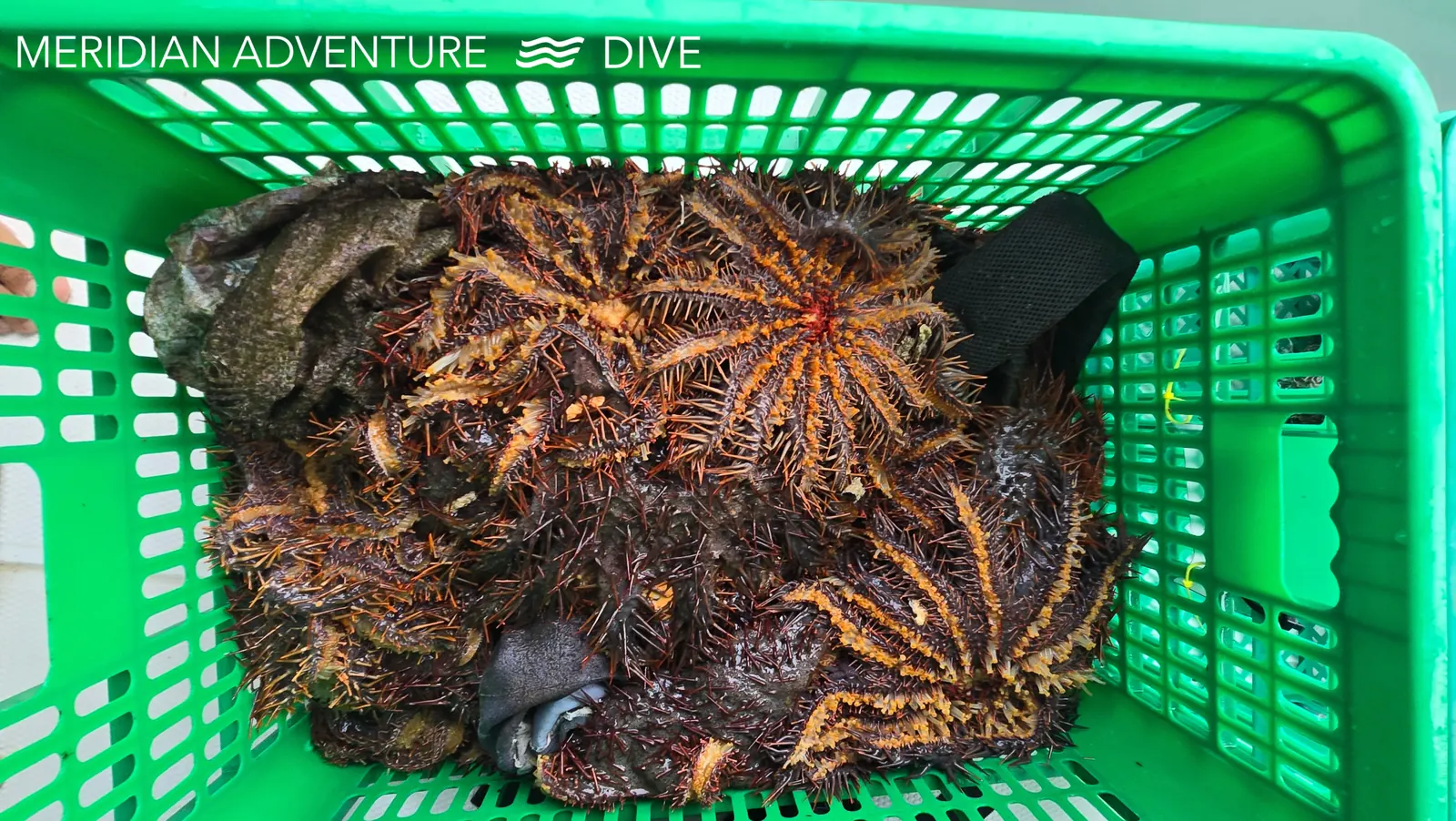
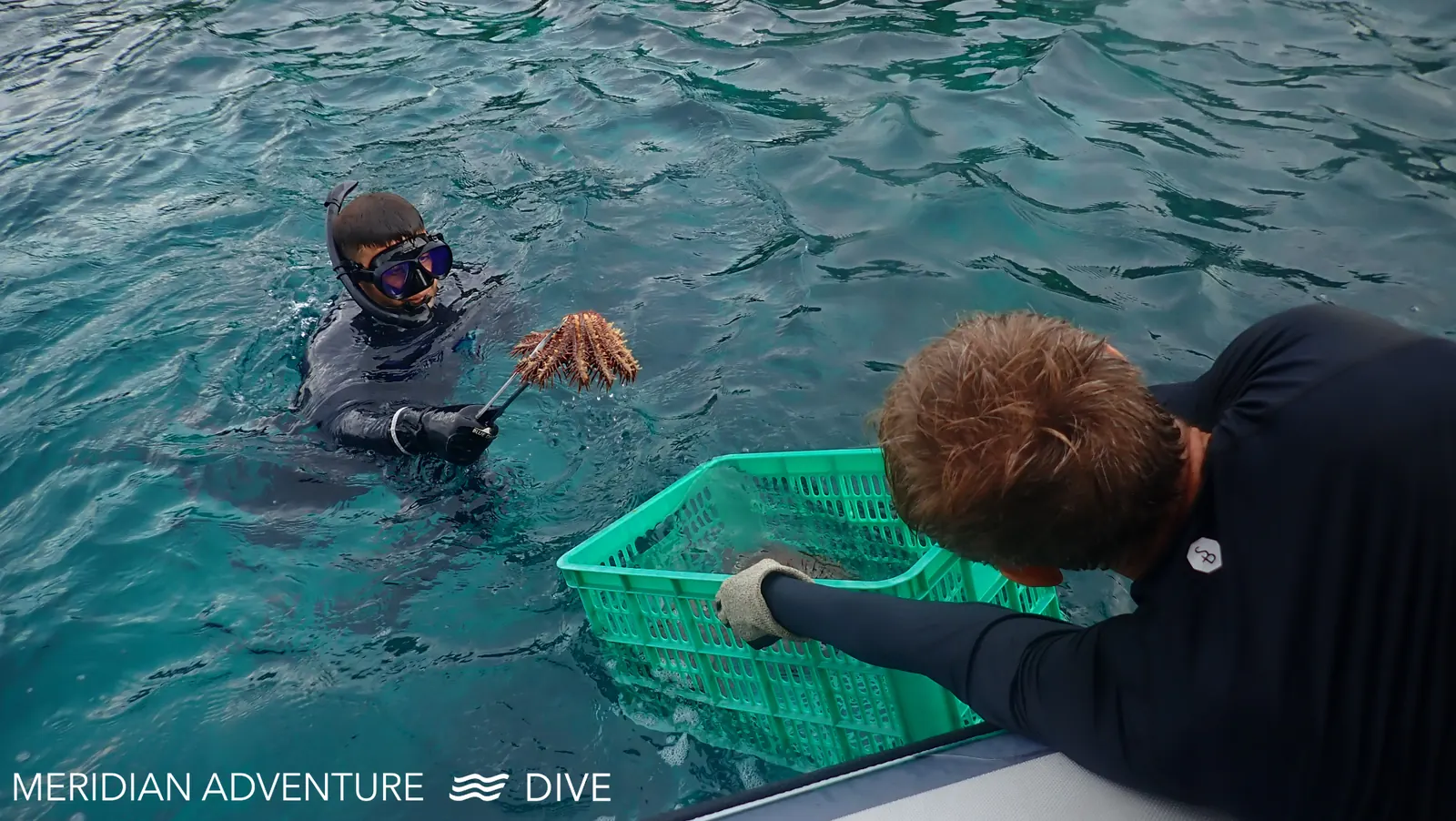
On 11 March, the entire dive team at Meridian Adventure Dive Resort worked alongside Jack from Raja Ampat Eco Lodge to remove two major coral predators — Crown of Thorns starfish and Drupella snails — and what began as a routine clean-up quickly revealed a more urgent challenge below the surface.
Crown of Thorns in Raja Ampat: A Growing Threat
During the survey, Crown of Thorns starfish were found at levels that could indicate a developing outbreak. In some locations, individuals were spotted every few metres, suggesting a population that could cause serious coral damage if left unmanaged. Even more concerning were the visible feeding scars across the reef, which suggest that many more starfish may still be hidden from view.
Even so, there is reason for cautious optimism. Regular clean-up efforts, ideally on a weekly basis, can help keep the problem under control before it spreads further. Early intervention remains one of the most important tools in protecting fragile coral ecosystems, and this proactive response is a meaningful step in supporting reef health in central Raja Ampat.
Drupella Snails in Raja Ampat and Their Impact on Coral
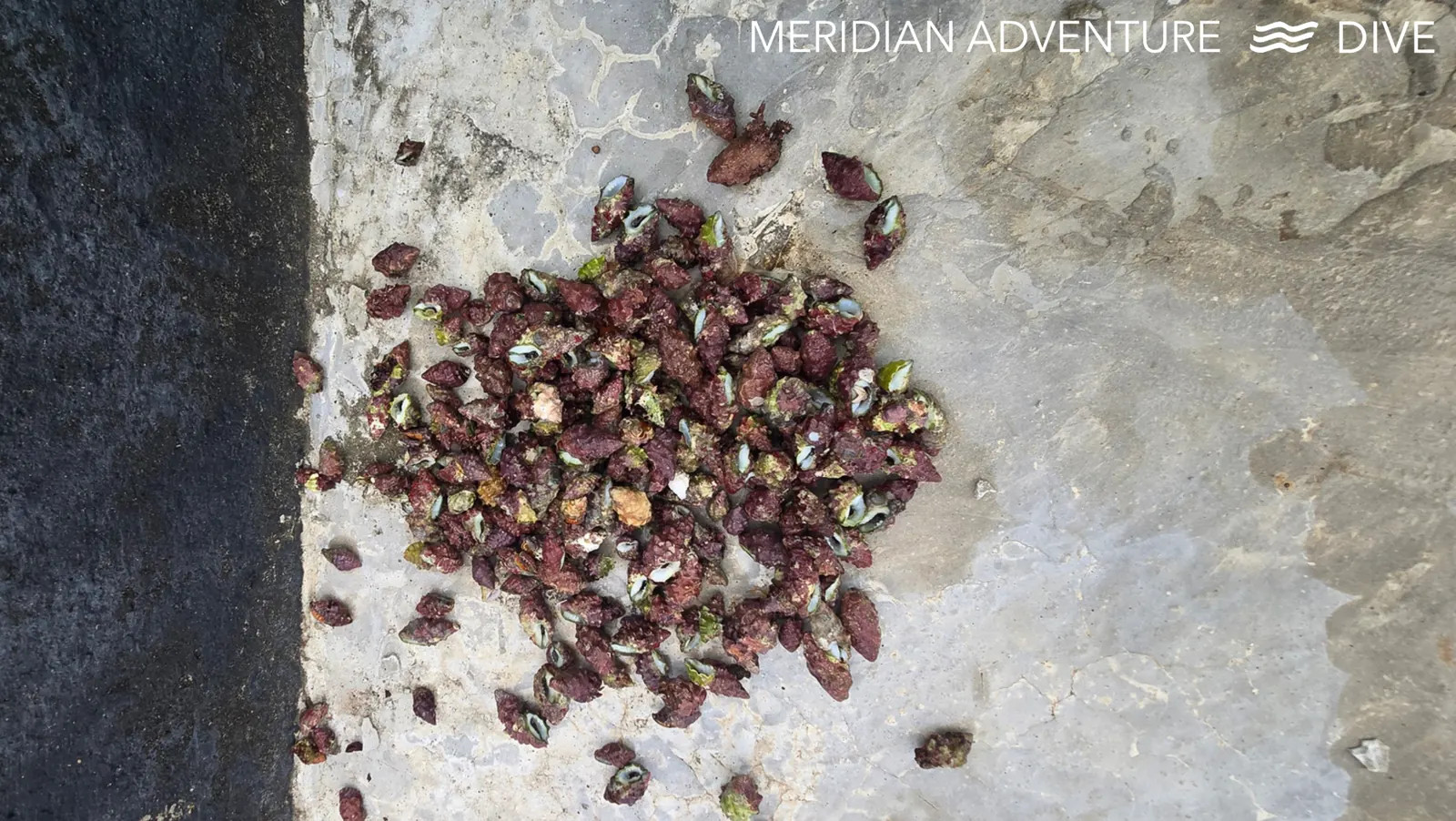
One of the most striking findings was the large number of Drupella snails present on the reef. These small coral predators can still cause major damage when populations grow unchecked. During a single dive session, nearly 200 were removed, highlighting both the scale of the issue and the importance of direct action.
Unlike Crown of Thorns starfish, Drupella are easier and safer to remove with basic tools such as tweezers. With the right equipment, planning, and teamwork, it is possible to remove thousands in a single dive. That makes this type of Raja Ampat reef restoration not only practical, but also highly effective when carried out consistently.
It also creates opportunities for creative conservation initiatives, turning removals into focused team efforts that deliver immediate benefits for coral health and long-term reef resilience.
Why Raja Ampat Reef Restoration Needs Early Action
Comparisons with previous years show a worrying pattern. Areas that were thriving in 2018 have since degraded into coral rubble, likely as a result of Crown of Thorns outbreaks, Drupella predation, and coral bleaching. In some places, macroalgae are beginning to dominate, which is often a clear sign of deeper ecosystem imbalance.
Yet the outlook is not hopeless. Healthy reef pockets still remain and clearly demonstrate what these ecosystems can be when conditions are right. Even damaged areas have the potential to recover when pressure is reduced and restoration work continues.
Practical solutions such as reef stars can help stabilise degraded zones and support coral regeneration over time. These methods are accessible, proven, and increasingly important for the future of Raja Ampat reef restoration.
Working Together to Restore Raja Ampat’s Reefs
The message is clear: steady and active involvement can make a real difference. Located in the centre of one of the most biologically diverse marine regions on earth, Meridian Adventure Dive Resort and Raja Ampat Eco Lodge are in a strong position to help lead ongoing reef conservation efforts in central Raja Ampat.
Through regular clean-ups, collaboration with local partners, and a shared commitment to reef restoration, there is a genuine opportunity to reverse damage and protect the future of these coral ecosystems. This work goes far beyond a single clean-up dive. It is a reminder that protecting the ocean requires commitment, cooperation, and a willingness to act before threats become irreversible.
As this effort shows, when people come together with a shared purpose, recovery becomes more than a possibility. It becomes an ongoing process of care, action, and long-term stewardship.
Supporting Raja Ampat Reef Restoration Together
This reef conservation effort was carried out through collaboration between Meridian Adventure Dive Resort and Raja Ampat Eco Lodge, combining local knowledge, dive operations, and hands-on action to support reef protection in Raja Ampat.