Raja Ampat Octopus: Intelligence, Camouflage, and Mystery on the Reef
Raja Ampat’s reefs are home to many stunning and mysterious creatures. The octopus stands out among these, captivating divers and snorkellers with its intelligence, camouflage abilities, and unique behaviour.
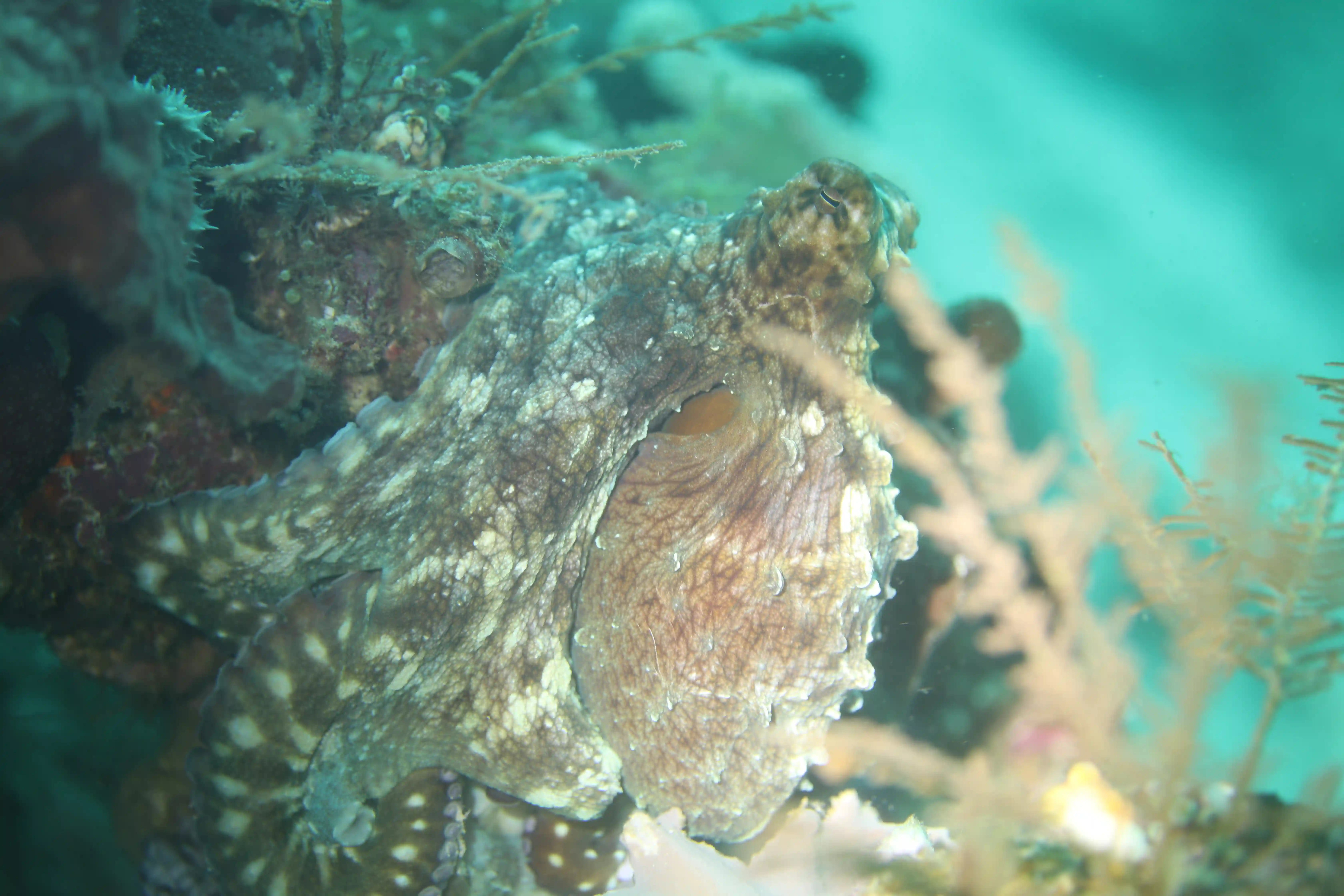
We have thoroughly researched ten aspects of octopuses to enhance our guests’ understanding of the magnificent experience of observing these creatures underwater.
What Predators Does an Octopus Have?
Sharks: Dogfish sharks, Whitetip reef sharks and nurse sharks. Dolphins: they shake and toss the octopus on the water’s surface and sometimes grasp it with their teeth before slapping it down. Seals and otters. Moray Eels: their snake-shaped body can invade the holes and small openings octopuses use as hideouts. Birds: Diving sea and shore birds such as gulls or penguins. Fish: like cod, barracudas, or scorpion fishes. Rays: hides in the sand until the octopus approaches close enough, and then, suddenly, the ray strikes.
How Do Octopuses Camouflage With Their Surroundings?
They can change their colour and texture to blend in with their natural environment.
Colour alteration is achieved by the cells known as chromatophores, which are located under their skins and contain a sac full of colourful pigments. By contracting and expanding this sac, the octopus can change the shade of its colour and its intensity.
Octopuses can change their skin texture by altering the size of papillae on their skin. To appear more intimidating, octopuses can imitate spikes, bumps, and ridges. Within a matter of seconds, they can change their appearance to no longer look like the species at all.
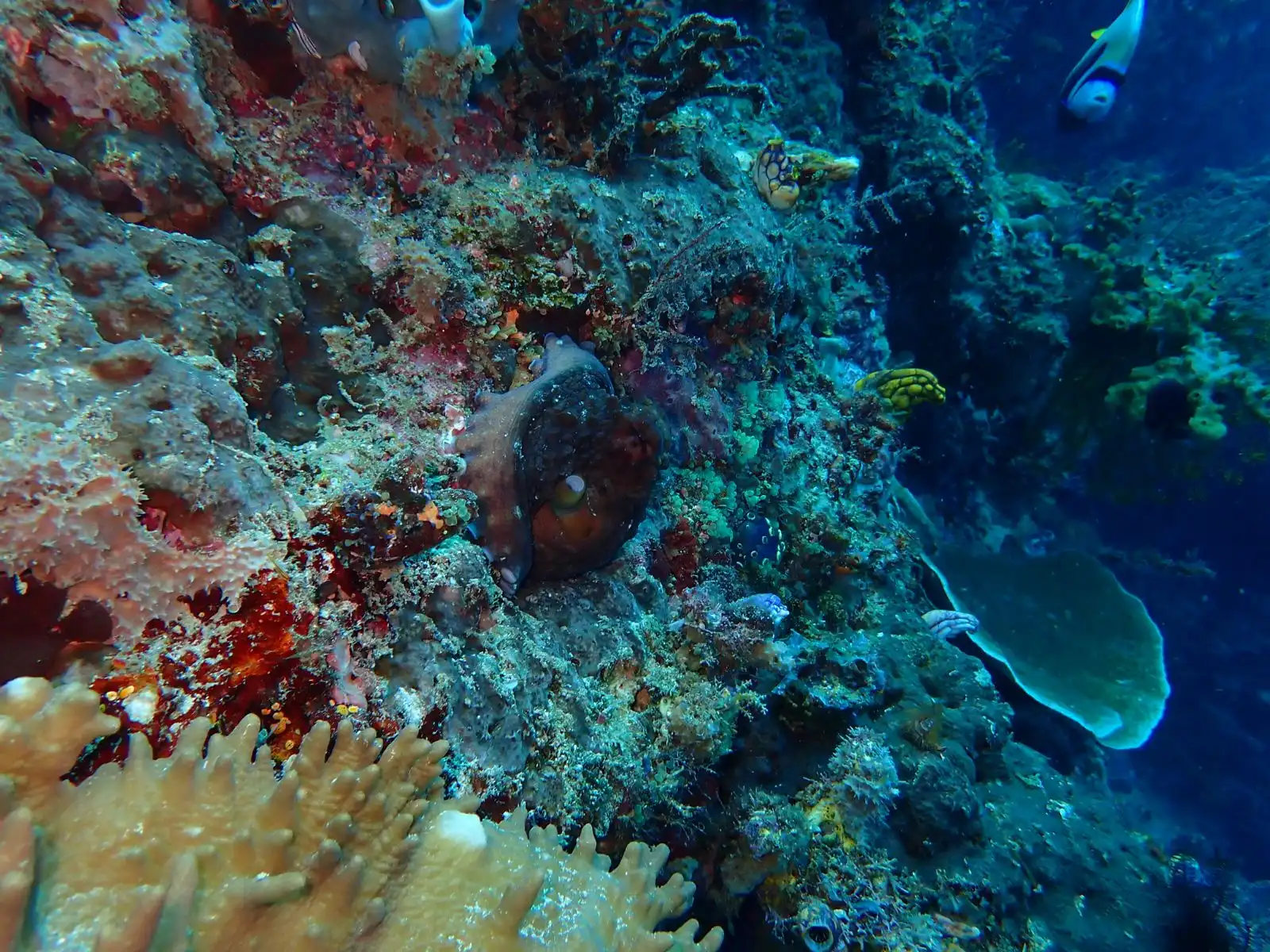
Octopuses can change colour and texture to blend into reef environments, hide from predators, and move through the underwater world with astonishing subtlety.
The octopus is proof that the reef is not only beautiful. It is intelligent, adaptive, and full of hidden stories.
Why Do They Hide From People?
The primary reason that an octopus hides from people is for their safety and protection. Octopuses are brilliant animals. If a human gets too close, they can escape quickly by shooting themselves forward by expelling water from a muscular tube called a siphon.
What Does an Octopus Eat?
Octopuses are carnivores, meaning they primarily feed on meat. When young, they consume small creatures such as copepods, larval crabs, and sea stars. As adults, they prey on crabs, clams, snails, and small fish, favouring crabs, shrimp, and lobsters.
Octopuses have very sensitive suckers that aid in their ability to taste what they touch. During the night, they hunt by pouncing on their prey and wrapping it in the webbing between their arms. Their advantage lies in their exceptional ability to see well in dark and murky waters.
How and From Which Part of Their Body Do Octopuses Eat?
Octopuses are known for their ambush tactics. They drop down on their prey, encircle it with their arms, and draw it into their mouths using their powerful beaks. Their diet often includes prey with shells, which they can access by dissolving the connecting tissues with a toxin from their bodies.
When dealing with different prey, octopuses exhibit a calculated approach, injecting the toxin into one or two holes as needed. This suggests an instinctual understanding of how to obtain the most from their meal effectively.
What Is the Habitat of an Octopus?
Octopuses of different species live in oceans worldwide, only in saltwater. They are adaptable and live in everything from small shallow pools to depths up to 2000m. Most are pelagic, meaning they live near the water surfaces in shells and coral reefs. Some other octopus species live on the ocean floor, making their homes out of caves.
Why Do Octopuses Die After Making Babies?
Octopuses are semelparous animals, which means they reproduce once and then die. The male parent dies after mating, and the female survives until her eggs have hatched.
Females usually lay 200,000 to 400,000 eggs, which varies depending on species. She guards the eggs until they hatch. She even stops eating. After the eggs hatch, her body turns on her. It goes through cellular suicide, which rips through her tissues and organs until she dies. Meanwhile, the male swam away and was killed in a few months.
Why Do Octopuses Squirt Ink?
Octopuses employ their ink as a defence mechanism to evade predators.
When under threat, they expel substantial amounts of ink into the water using their siphon to disorient the aggressor. This ink produces a dense cloud that obstructs the predator’s view, enabling the octopus to swiftly escape.
Are Octopuses Friendly?
Octopuses are known for their playful and curious nature. Some species engage in cuddling behaviour, while others form bonds with humans. They are considered among the most highly evolved invertebrates and are believed to possess intelligence by many biologists. With a complex nervous system, octopuses can learn and demonstrate memory.
Octopuses take pleasure in playing with toys, exhibiting play behaviour, and solving simple mazes. They are able to recognise human faces in laboratory and ocean settings. When they have had a positive prior interaction with humans, they are unlikely to squirt ink.
How Long Can an Octopus Live?
The typical lifespan in natural habitats varies between 1 to 5 years, contingent upon the species.
The octopus is a testament to the wonders of marine life. Its intelligence, adaptability, and unique behaviours make it a fascinating subject of study and a highlight for divers exploring these vibrant reefs. As we continue to learn more about these enigmatic creatures, it becomes increasingly clear how vital it is to protect and preserve their natural habitats, ensuring that the reefs of Raja Ampat remain a haven for octopuses and countless other species.
Frequently Asked Questions About Octopuses in Raja Ampat
Can octopuses camouflage with their surroundings?
Why do octopuses hide from people?
What do octopuses eat?
Why do octopuses squirt ink?
Are octopuses intelligent?
How long can an octopus live?
Ready to discover Raja Ampat’s reef creatures in person?
Send us a message and our team will help you plan a personalised Raja Ampat dive trip around your dates, diving level, and dream underwater encounters.
Start Planning Your TripAbout Organization:
Located in the stunning Raja Ampat, Indonesia, Meridian Adventure Dive is a PADI 5-Star Eco Resort. Visit our website: Meridian Adventure Dive Resort