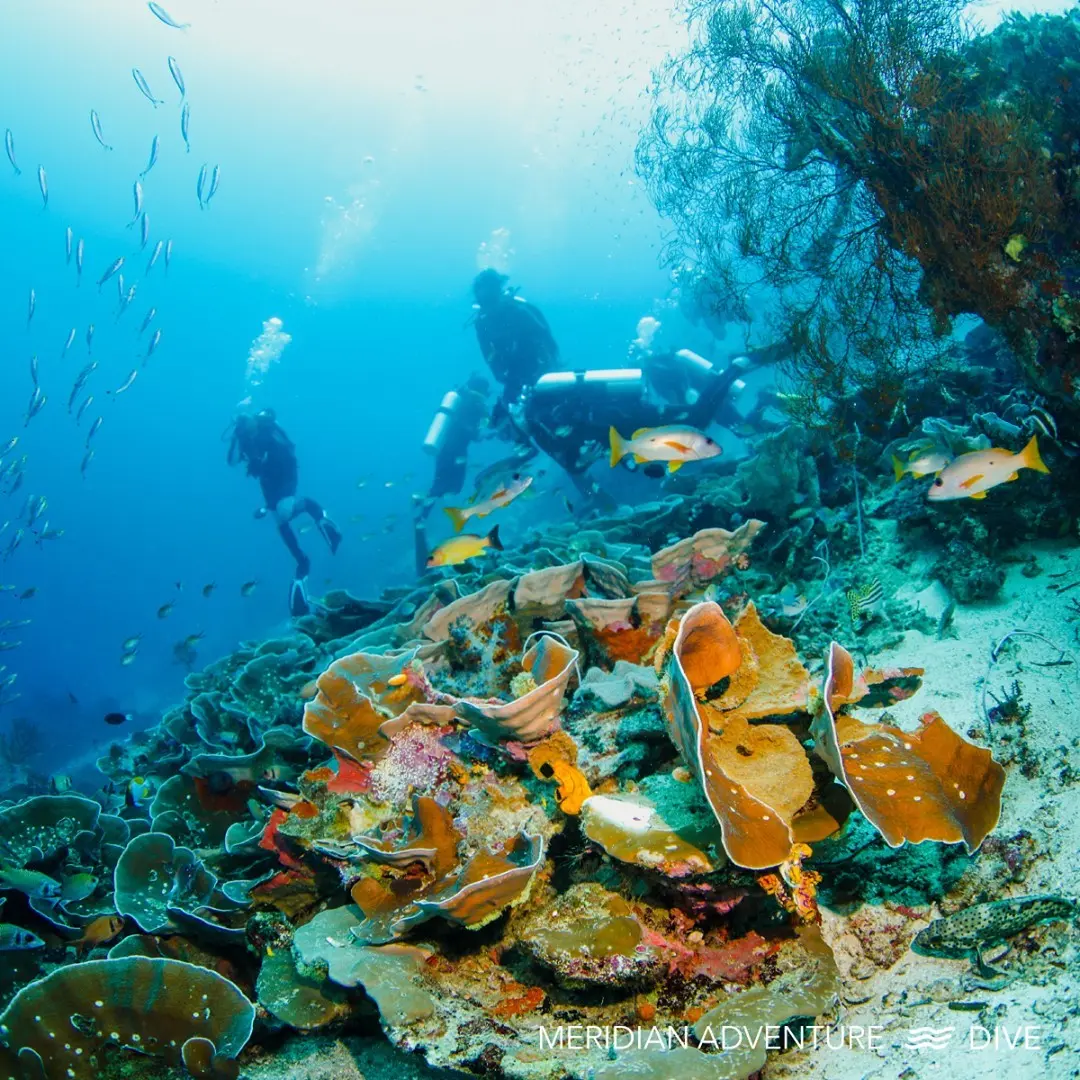
Colourful corals, hidden macro life and a reef wall that seems to reveal something new with every metre—Friwen Wall is one of the most rewarding dive sites in Raja Ampat’s Dampier Strait.
Also commonly written as Friwin Wall, this versatile site combines a shallow coral reef, sandy sections and a wall descending to approximately 25 metres.
Friwen Wall Dive Site at a Glance
Conditions in the Dampier Strait can change with the tide. The exact entry point, direction and dive profile should therefore always be selected by a guide familiar with the site and its current conditions.
Where Is Friwen Wall?
Friwen Wall is located around the Friwen Islands in the Dampier Strait, one of Raja Ampat’s best-known diving regions.
The Dampier Strait runs between the islands of Waigeo and Batanta and contains many of central Raja Ampat’s celebrated reefs. Nutrient-rich water moving through the strait supports dense coral growth and an exceptional variety of marine life.
Unlike the sloping reefs found at many nearby dive sites, Friwen Wall offers a more dramatic vertical profile. Its combination of shallow reef, coral-covered wall and deeper sections creates habitats for both small reef creatures and larger passing marine life.
What Is Diving at Friwen Wall Like?
A dive at Friwen Wall begins with an assessment of the tide, current and diver experience. Rather than following one fixed route, local guides select the safest and most rewarding starting point for the conditions. Depending on the direction of the water movement, the dive can begin at either end of the wall.
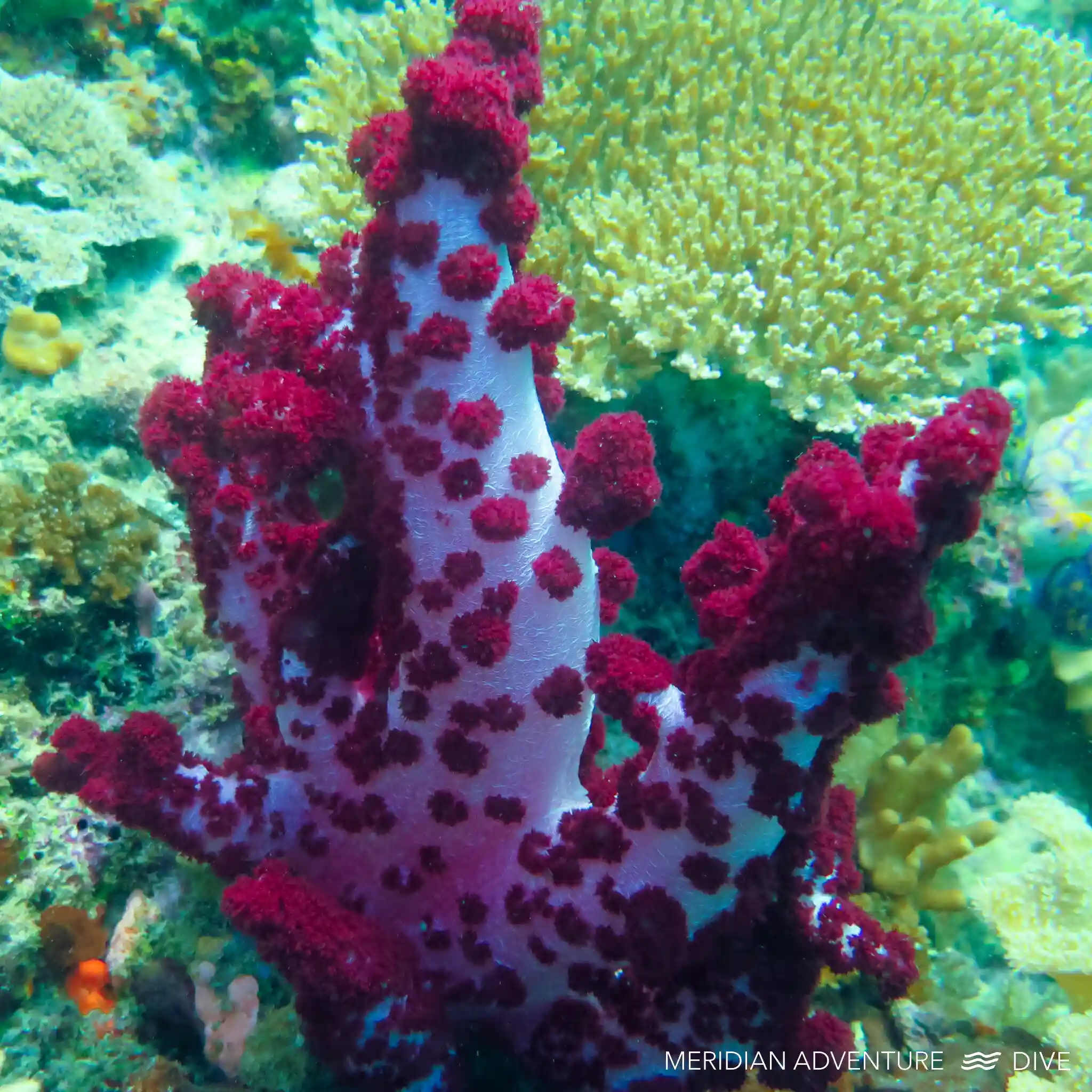
After entering from the boat, divers descend beside a shallow reef where sunlight illuminates colourful hard corals, soft corals, sea fans and sponges. The wall becomes more pronounced as it descends towards approximately 25 metres, with small ledges, coral formations and crevices creating habitat for a wide range of marine life.
When the current is suitable, divers can allow it to carry them gently along the wall. Good buoyancy control is important both for comfort and to avoid accidental contact with the reef.
PADI lists Friwen Wall as a wall and ocean dive suitable for different diver levels, with a maximum depth of approximately 25 metres. For an independent site reference, see the official PADI Friwen Wall dive-site listing .
A Dive Site for Different Experience Levels
Friwen Wall can be enjoyed by divers with different levels of experience, but the appropriate route depends on the day’s conditions.
Beginner Divers
In calm conditions, newer divers can explore the shallower sections under the supervision of an experienced guide. Comfortable buoyancy control is particularly important around living coral.
Experienced Divers
More experienced divers can explore the deeper wall, spend additional time searching for macro subjects or follow a drift profile when current conditions permit.
Snorkellers
The shallow coral areas near Friwen can also suit snorkellers when surface conditions, current and boat traffic allow.
Marine Life at Friwen Wall
The greatest appeal of Friwen Wall is its variety. The coral wall supports macro creatures hidden within small reef habitats, while the open water beside it attracts schooling fish and occasional larger animals.
Sightings vary naturally from dive to dive, but marine life may include:
Nudibranchs
Colourful sea slugs can be found on coral, sponge growth and rocky surfaces, making them favourite subjects for macro photographers.
Pygmy Seahorses
Pygmy seahorses may live on gorgonian sea fans, where their colour and texture make them extraordinarily difficult to spot.
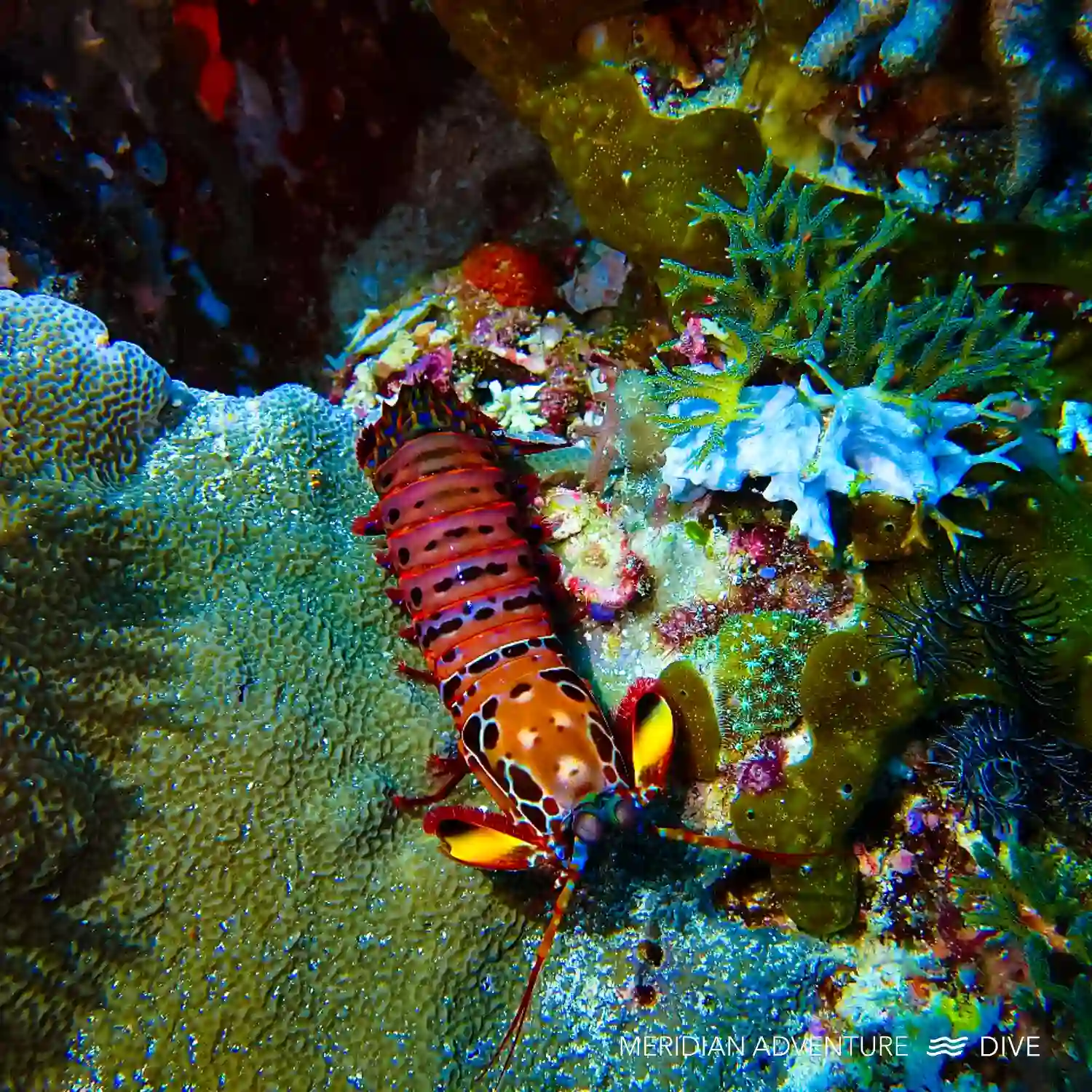
Mantis Shrimps
Colourful mantis shrimps can sometimes be seen looking out from burrows and crevices around the reef.
Octopuses & Cuttlefish
Both use remarkable colour and texture changes for camouflage, communication and hunting.
Cleaner Shrimps
Small cleaner shrimps may be found around coral formations and cleaning stations.
Reef Sharks
Blacktip and other reef sharks may occasionally move along the reef or through the open water.
Schooling Fusiliers
Yellowtail fusiliers can gather beside the wall, especially when water movement brings food through the Dampier Strait.
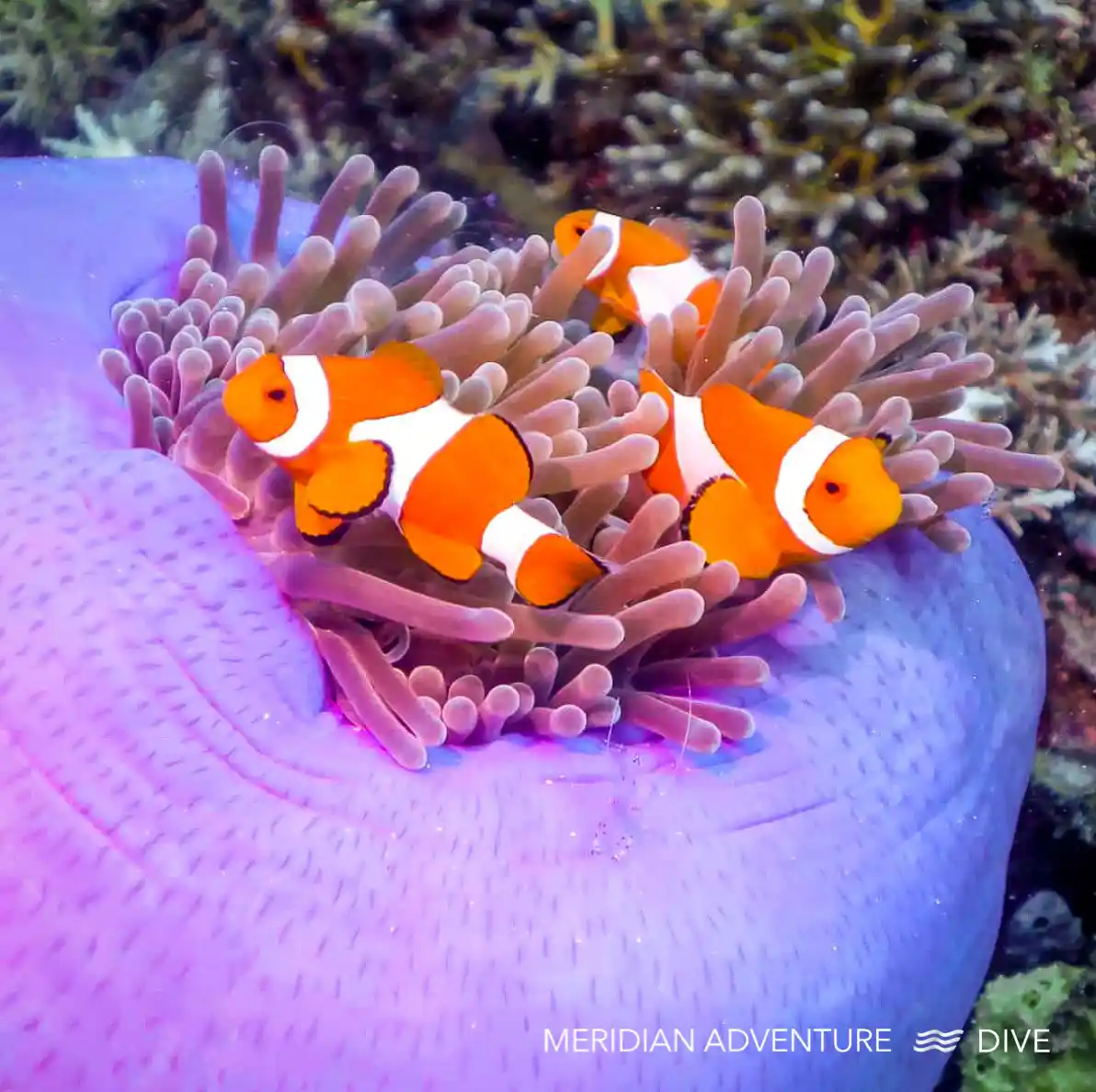
Bannerfish & Anemonefish
Bannerfish, anemonefish and damselfish bring constant movement to the shallower parts of the site.
Coral Life
Hard corals, soft corals, sponges and sea fans create habitat for a wide range of cryptic and schooling marine life.
Coral and Underwater Topography
Friwen Wall is not defined by a single marine-life encounter. Its complete reef environment is what makes the dive memorable.
Hard corals create structure across the shallower sections, while soft corals, sponges and sea fans add colour and movement to the wall. Gorgonian sea fans create habitat for pygmy seahorses and other cryptic species, while crevices provide protection for shrimps, octopuses and nocturnal animals.
The combination of wall, reef and sandy bottom gives divers several different environments to explore during one dive.
Wide-Angle and Macro Opportunities
Friwen Wall is particularly well suited to underwater photography because it offers both wide-angle and macro opportunities.
Wide-Angle Subjects
Divers moving beside the wall, schools of fusiliers, sea fans, shallow sunlight and occasional reef sharks.
Macro Subjects
Nudibranchs, pygmy seahorses, cleaner shrimps, mantis shrimps, small anemonefish, coral-dwelling crabs and octopus details.
Responsible Technique
Keep cameras, fins and equipment clear of the coral and never touch, move or manipulate an animal for a photograph.
When Is the Best Time to Dive Friwen Wall?
Friwen Wall can be explored throughout the year, but the quality and character of each dive depend more on the day’s tides, current and weather than on a fixed calendar date.
The current may determine the safest entry point, dive direction, suitable depth, schooling-fish activity and whether the site is appropriate for less-experienced divers or snorkellers.
At Meridian Adventure Dive, the dive team evaluates conditions and chooses the entry point and route that provide the safest and most rewarding experience for the group.
Responsible Diving at Friwen Wall
Friwen Wall’s coral cover is beautiful but vulnerable. Divers and snorkellers can help protect the site by following a few essential practices.
- Maintain neutral buoyancy.
- Keep fins and equipment away from the reef.
- Never stand on or hold living coral.
- Do not touch or reposition marine animals.
- Avoid chasing sharks, turtles or schooling fish.
- Secure gauges and alternate air sources.
- Follow the dive guide’s route and instructions.
- Take only photographs and leave only bubbles.
These practices are especially important when observing pygmy seahorses and other small animals living on delicate coral structures.
Why Dive Friwen Wall?
Friwen Wall brings together many of the qualities divers hope to experience in Raja Ampat.
It offers dramatic underwater topography without requiring every diver to follow a deep profile. It provides opportunities to see schooling fish while rewarding those who slow down and search for tiny creatures. It is suitable for wide-angle photography, macro photography and relaxed reef observation.
Most importantly, it demonstrates that an extraordinary dive does not depend on one guaranteed animal encounter. At Friwen Wall, the complete ecosystem is the attraction: coral, current, colour and marine life working together across every section of the reef.
Dive Raja Ampat With Meridian Adventure Dive
Raja Ampat is wild, remote and constantly changing. Meridian Adventure Dive selects dive sites and entry points according to tides, currents, weather and guest experience.
Located in Waisai, Raja Ampat, Indonesia, Meridian Adventure Dive is a PADI 5-Star Eco Dive Resort offering professionally planned diving, personalised service and reliable modern comfort.
Frequently Asked Questions
Is it called Friwen Wall or Friwin Wall?
Both spellings appear in dive publications and online guides. “Friwen Wall” is the spelling most commonly used by current dive-site directories, while “Friwin Wall” remains a frequently searched alternative.
How deep is Friwen Wall?
The site extends from very shallow coral areas to a maximum recreational depth of approximately 25 metres. The exact dive profile depends on certification level, experience, conditions and the day’s dive plan.
Is Friwen Wall suitable for beginner divers?
It can be suitable for beginner divers when conditions are calm and the dive is planned around the shallower reef. Current strength can change, so suitability should always be assessed by a guide familiar with the site.
Can you snorkel at Friwen Wall?
Yes. The shallow reef sections can offer good snorkelling in suitable conditions. Current, boat traffic and surface conditions must be evaluated before entering the water.
What marine life can you see at Friwen Wall?
Possible sightings include nudibranchs, pygmy seahorses, mantis shrimps, cleaner shrimps, octopuses, cuttlefish, anemonefish, fusiliers and reef sharks. Sightings are never guaranteed and vary according to conditions.
Is Friwen Wall good for underwater photography?
Yes. The wall provides wide-angle opportunities with corals, divers and schooling fish, while its smaller reef habitats support macro subjects such as nudibranchs, shrimps and pygmy seahorses.
Do you need good buoyancy control?
Yes. Good buoyancy helps divers remain comfortable beside the wall and prevents contact with fragile coral. Divers who need additional support should inform their guide before entering the water.