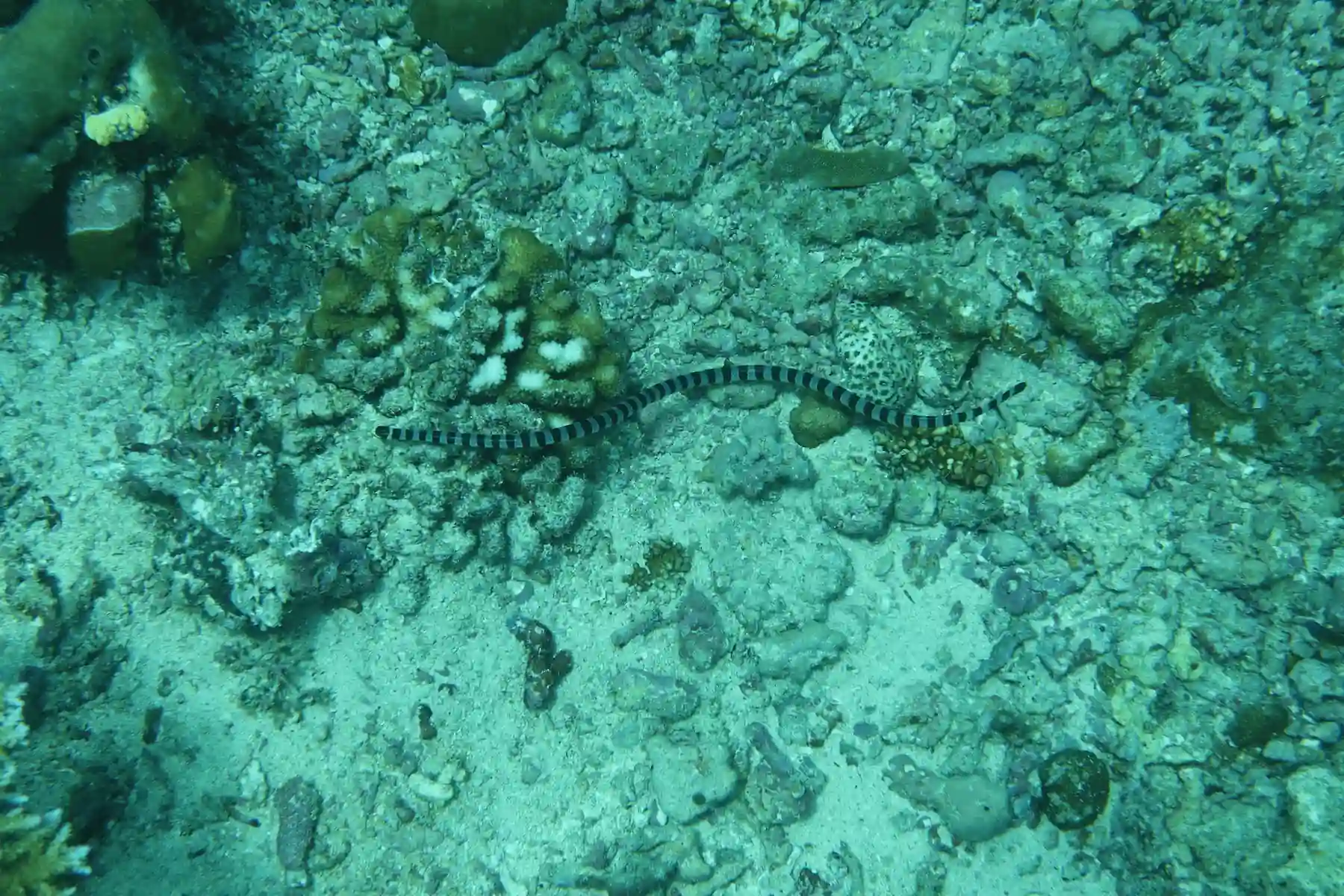
Banded Sea Snake in Raja Ampat
What divers should know about the banded sea krait, one of Raja Ampat’s most striking reef encounters.
Creature Briefing
A banded sea snake in Raja Ampat is always an exciting sighting. More accurately known as the banded sea krait, this striking black-and-white reptile is one of the more memorable creatures divers and snorkellers may encounter on Indo-Pacific reefs.
Although highly venomous, it is generally not aggressive, and bites to humans are rare. The safest way to enjoy the encounter is simple: stay calm, keep distance, avoid sudden movements and never try to touch or corner the animal.
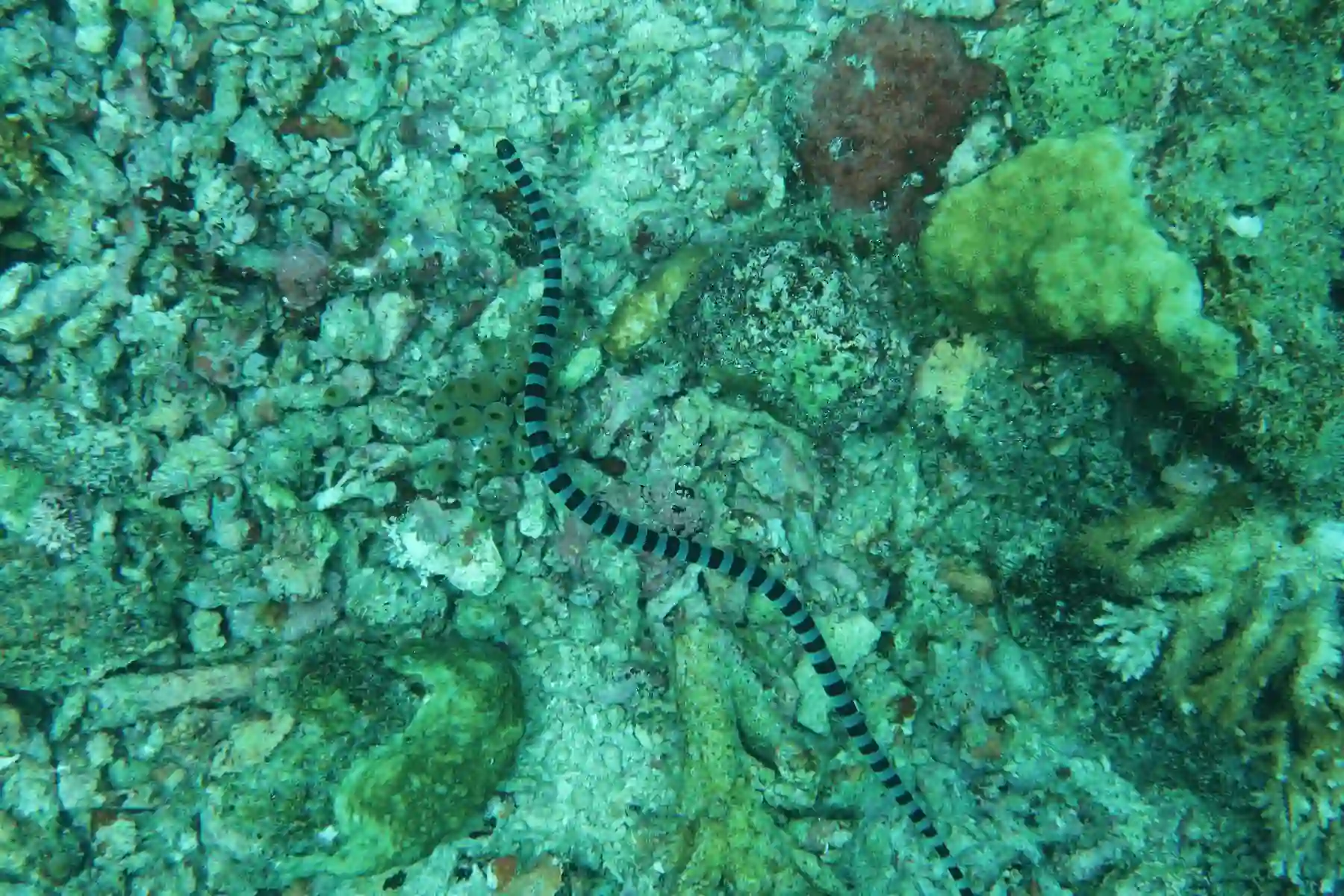
Is a Banded Sea Snake Dangerous?
Yes. The banded sea krait is highly venomous, but it is generally not aggressive and human bites are rare. Divers should never touch, grab, corner or chase one.
Fear is not useful underwater. Calm, respectful distance is the best response.
What Should You Do If It Approaches?
- Stay calm and avoid sudden movements.
- Keep your hands close to your body.
- Do not block the animal’s path.
- Do not try to push it away or grab it.
- Let your dive guide manage the encounter.
Why Do They Swim Close to Divers?
Sea snakes can appear curious underwater. They may investigate elongated floating objects, including boats, paddleboards, dive hoses or snorkellers’ fins.
That does not mean divers should interact with them. The safest choice is still to stay calm and give the animal space.
Sea Snake or Sea Krait?
Sea kraits are amphibious. They forage in the ocean but return to land to rest, digest, mate and lay eggs. That is one of the easiest ways they differ from fully aquatic sea snakes.
For divers, the practical rule is the same: observe quietly and never interfere.
Responsible Encounter Habits
- Listen carefully to the dive briefing.
- Keep a respectful distance from the animal.
- Maintain good buoyancy above the reef.
- Allow wildlife to move naturally.
- Photograph without chasing or crowding.
Mistakes to Avoid
- Do not touch or handle the sea krait.
- Do not block its path against the reef.
- Do not chase it for photos or video.
- Do not kick suddenly if it passes close.
- Do not treat venomous animals as harmless.
Raja Ampat Creature Encounters Are a Privilege
Marine-life sightings are never guaranteed, but professional planning and respectful diver behaviour give you the best chance of enjoying them safely. Meridian Adventure Dive plans dives around conditions, diver experience, reef awareness and responsible wildlife encounters.
Frequently Asked Questions About Banded Sea Snakes in Raja Ampat
Is a banded sea snake dangerous?
Yes, the banded sea krait is highly venomous, but it is generally not aggressive and human bites are rare. Divers should never touch or corner one.
What is the difference between a banded sea snake and a sea krait?
Sea kraits are amphibious, meaning they forage in the sea but return to land to rest, digest, mate and lay eggs. That is one of the easiest ways they differ from fully aquatic sea snakes.
Why do sea snakes sometimes swim close to divers?
Sea snakes may investigate elongated objects underwater, including fins, hoses or floating gear. Some close approaches may also relate to breeding behaviour in certain sea snake species. Divers should stay calm and avoid interaction.
What should I do if a sea snake approaches me underwater?
Stay calm, avoid sudden movements and do not try to grab, push or scare it away. Keep your hands close, maintain buoyancy and allow the animal to continue naturally.
Can snorkellers see banded sea kraits in Raja Ampat?
Yes, snorkellers may occasionally see banded sea kraits around shallow reefs, but sightings are opportunistic. Snorkellers should observe quietly, keep distance and never touch wildlife.
Explore More Creatures of Raja Ampat
Continue discovering the hidden side of Raja Ampat through creature features, macro life encounters and night diving stories from Meridian Adventure Dive.